
admin


Someone once said that anyone can have a child and call themselves “a parent”, but a real parent is someone who puts that child above their own selfish needs and wants.  When asked about the needs of their child and how difficult it is to meet those needs, many may have a different perspective or opinion and some may even say it’s a walk in the park.  After all,  it’s easy to identify your child’s physical needs:  nutritious food, warm clothes when it’s cold and making sure that your child goes to bed at a reasonable hour… just to name a few. But what about your child’s emotional needs and why is it important to know what it is? All human needs are inter-related and inter-dependant.  For example, your child may fight sleep for fear that you may leave home.  So meeting your child’s emotional needs are equally important to his development as meeting his physical needs. Here’s why: To develop his ability to form healthy emotional relationships throughout his life To know how to handle stress and trauma To develop a strong sense of competency and self-worth To develop the ability to effectively manage impulses and emotions To develop empathy, compassion and conscience for others And to develop a core belief system Growing up is difficult.  Learning to manage feelings, make sense of a complex adult world and learning to find one’s own identity is not an easy task!  And no matter how much parents try to protect their child from frightening situations, however reasonable and loving they may be or however child-centred a school they choose for their child, growing up is filled with difficulties. “We’ve tried everything”… “We treat them all alike”… “We’ve given the child everything he wants”.  These three remarks are frequently heard when parents ask for help with a difficult child.  The first suggests inconsistent handling, with swings between strict control and weak indulgence… The second overlooks the fact that siblings are not ‘all alike’ but vary in age and personality – and therefore in their individual needs… The third remark suggests that the parents have tried to compensate in irrelevant, extravagant material ways for their difficulty in meeting their child’s emotional needs.  (Berry, 1972) Failure to meet children’s needs If one of the basic needs remains unmet (or inadequately met), it will have an influence on all the aspects of your child’s development.  Emotional and behavioral disturbances are a good sign that you need to seek help. Be sure not to miss the next few posts where we deal with the four different basic needs. Resources: FACT Manual:  Socio-emotional Assessment of children.  Compiled by Louise Aucamp O’Conner, K.J.  2013.  Play Therapy.  Treatment Planning and Interventions.  The Ecosystemic Model and Workbook.  Second Edition.  Elsevier.  Oxford. Pringle, M.K.  1975.  The Needs of Children.  Routledge, Oxon.      
Meeting the needs of your child


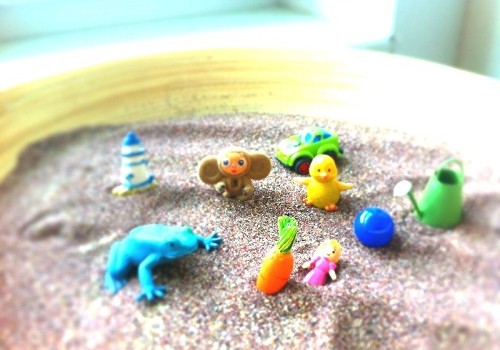
  The journey as a parent is not an easy one. Full stop. You have probably wished for a manual a zillion times. Parents always have their child’s best interest at heart, but different factors influence the way children experience their world. Sometimes these factors are out of your control and you might feel anxious and helpless when you one day realize that all is not as it once seemed to be. As adults, parents are able to think about a problem, look at it from different angles, determine their options or speak to someone they can trust. But children are different. They are not equipped to solve their own problems and don’t have the verbal abilities to express their feelings. You already know that you know that you know that you have to trust the fuzzy feeling in your heart when it comes to your child or you child’s teacher mentioned something about being concerned about the emotional and developmental well being of your child. PANIC!!! What do I do? Where do I start? The only certain thing that you know is that you need to contact a professional that will be capable to give you some answers. So you phone the Play Therapist’s office to make the appointment. At some stage, as a parent, you have heard (or read) that play is important for children and that it benefits all the spheres of your child’s development. You can take a deep breath and relax. You are at the perfect place! Some of our greatest child development philosophers have acknowledged that children learn the most about themselves and their world when they engaged in play. Play is their language and toys are their words. Therefore it makes sense that play within a therapeutic environment will give children the opportunity to take responsibility for behaviors, establish creative solutions to problems and accept themselves and others. They will experience and express emotions, learn respect for feelings of others, cultivate relational skills with family and gain pride in their abilities by means of something that they are the masters of. What can you expect from the Play Therapy process? Play Therapy is conducted within a very save environment by a trained Play Therapist and is a proven therapeutic modality that allows children to grow, learn, heal and thrive. Your child will have a therapy session once a week for about 50 minutes. During the therapy session the Play Therapist will be able to enter your child’s world through play. This will enable the therapist to assess and understand your child’s play and development by using age appropriate mediums. The Play Therapist reflects how your child is engaging with toys and the underlying emotions that seem to accompany the actions. The idea of being in control of play can help give your child confidence. Your child may feel out of control with events playing out in the rest of his or her life, but the sense of control during playtime is important. This allows your child to gain a degree of mastery. Your child will get the opportunity to confront his problems in the play session, to develop more appropriate resolutions, gain insight about how to handle situations, learn to respect the feelings of others, accept himself, cultivate relational skills with family and gain pride in his or her own abilities. The progress can be discussed during parenting sessions, as agreed. Your child’s trust and feelings of safety within the therapist is very important and will be considered when giving feedback. During therapy your child’s behavior may appear to get worse before it improves. This is normal and due to your child going through a period of sorting through intense feelings in Play Therapy. The Play Therapist will also discuss ways you can assist your child related to observations made in Play Therapy, as well as developmental needs. The length of time a child needs Play Therapy varies from child to child and depends upon various factors.

keep calm… and play on